
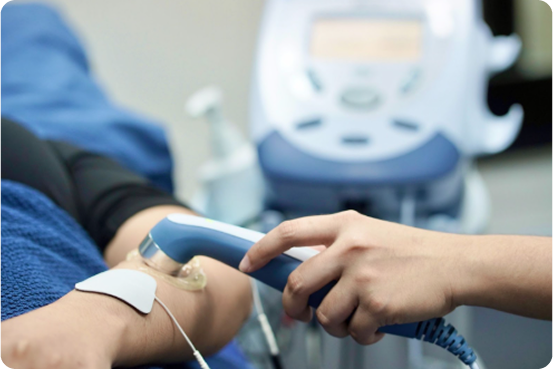
Overview of Ultrasound Therapy in Singapore
Ultrasound therapy is one of the therapeutic techniques offered at Orchard Health Clinic to support physical recovery and improve mobility. It involves the use of sound waves to stimulate tissues beneath the skin, helping to ease discomfort, reduce swelling, and support the body’s natural healing process. This treatment can be applied on its own or as part of a broader physiotherapy plan tailored to the individual’s condition and goals.
Benefits of Ultrasound Therapy
Ultrasound therapy may provide a range of benefits for injury recovery and pain management. Clinical studies suggest that it can help reduce pain levels, decrease inflammation, and support the repair of soft tissue injuries.
By enhancing circulation and promoting muscle relaxation, Ultrasound therapy can contribute to improved mobility and a more efficient healing process. When used as part of a broader physiotherapy plan, it may assist in managing discomfort and supporting long-term rehabilitation outcomes.
Our team will assess your needs and determine if Ultrasound therapy may be suitable to complement your recovery. Whether you’re dealing with a recent injury, chronic discomfort, or post-surgical swelling, ultrasound may offer supportive relief in your rehabilitation journey.
What is Ultrasound Therapy?
Ultrasound therapy is a non-invasive technique used in physiotherapy that delivers high-frequency sound waves into the body’s soft tissues. These sound waves can generate warmth or stimulate movement at a cellular level, depending on how the device is used. The purpose is to support circulation, promote tissue healing, and ease discomfort.
It is often recommended for individuals experiencing musculoskeletal issues such as tendon strains, ligament sprains, or joint stiffness. Ultrasound therapy may be integrated into a structured care plan that includes manual treatment, cryotherapy, movement training, and other approaches available at Orchard Health Clinic.
During each session, a conductive gel is applied to the targeted area, and a handheld device is used to deliver the sound waves. This process typically causes a mild sensation of warmth or tingling. Sessions usually last between 5 to 10 minutes and are adjusted according to the individual’s condition and recovery needs.
Types of Ultrasound Therapy
Different forms of Ultrasound therapy may be used depending on the treatment objectives. Each type works in a specific way to address inflammation, stiffness, or healing needs.
Thermal Ultrasound Therapy
This form of treatment creates a warming effect in the deep tissues. The gentle heat produced helps to increase blood flow and relax muscles.
It is commonly used to relieve tightness and prepare tissues for further manual techniques or movement-based treatment.
Pulsed Ultrasound Therapy
Instead of continuous waves, pulsed ultrasound delivers sound waves in intervals. This method aims to reduce inflammation and promote recovery without producing a heating effect. It is often applied when the focus is on tissue repair rather than warming.
Low-Intensity Pulsed Ultrasound Therapy
Low-intensity pulsed ultrasound (LIPUS) uses very gentle sound waves to stimulate tissue healing at the cellular level. While more commonly associated with bone healing in some settings, it may also be considered for soft tissue support depending on individual needs.


