
Kids Physiotherapy in Singapore
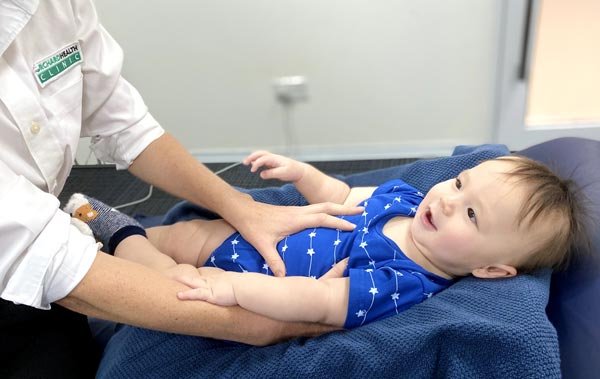
As a parent, noticing that your child is not moving, developing, or reaching milestones the way you expected can feel unsettling. At Orchard Health Clinic, our paediatric physiotherapy team in Singapore works with children from infancy through adolescence, supporting their physical development, addressing developmental issues early, and helping them move, play, and grow with confidence.
Our paediatric physiotherapy team has experience working with a wide range of childhood conditions, from child developmental delays and low muscle tone to torticollis, flat head syndrome, and sports injuries in adolescence Appointments are conducted in a calm, child-friendly environment, with parents fully involved throughout.
No referral is needed. If you have a concern about your child’s movement or development, an early assessment is always worthwhile.
What is Kids Physiotherapy?
Kids physiotherapy, also called paediatric physiotherapy, is a specialised branch of physiotherapy focused on the physical development, movement, and musculoskeletal health of infants, children, and adolescents. A paediatric physiotherapist assesses how a child moves, identifies any delays or difficulties in physical development, and provides treatment and guidance to support their progress.
Children are not simply small adults. Their bodies are growing, their bones and muscles are developing, and their neurological systems are still being wired. This means that how conditions present, what causes them, and how they respond to treatment can differ significantly from adult physiotherapy. Paediatric physiotherapists are trained to account for these differences and to deliver care that is developmentally appropriate, and gentle.
Child Motor Development Milestones
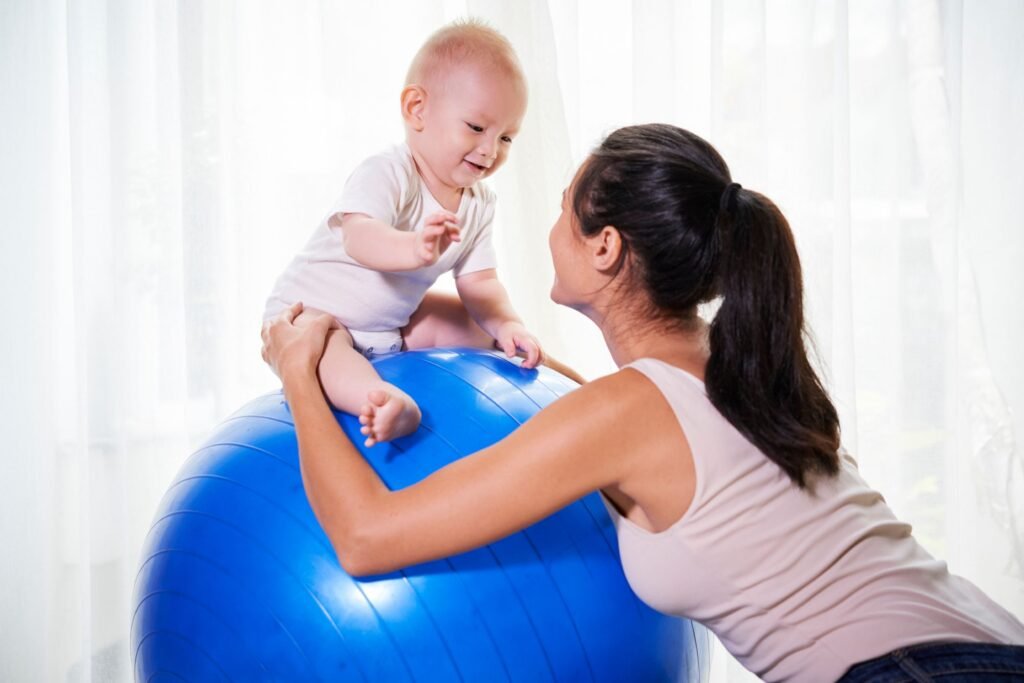
Every child develops at their own pace, and there is a natural range for when different motor skills emerge. The table below provides a general guide to typical gross motor milestones. Falling slightly outside these ranges does not automatically indicate a problem, but consistent delay across multiple areas, or a plateau in development, is worth discussing with a paediatric physiotherapist.
| Age | Typical Motor Milestones |
|---|---|
| 3 months | Lifts head during tummy time, bring hands to midline, follows movement with eyes. |
| 6 months | Rolls in both directions, reaches for objects, sits with support. |
| 9 months | Sits independently, begins crawling or commando crawiling, transfers objects between hands |
| 12 months | Pulls to stand, cruises along furniture, may take first independent steps. |
| 15–18 months | Walks independently, squats to pick up objects, pushes and pulls toys |
| 2 years | Runs, kicks a ball, walks up and down with support |
| 3 years | Jumps with both feet, pedals a tricycle, walks up stairs alternating feet |
| 4–5 years | Hops on one foot catches a ball, balances on one foot, climbs confidently |
What matters most is continuous progress. A child who is consistently moving forward, even if slightly later than average, is generally developing well. A child whose development appears to have slowed, plateaued, or regressed warrants earlier attention.
Paediatric Conditions Treated by Orchard Health Clinic
Developmental Conditions
Children develop movement, coordination, and physical skills at different rates. Some may experience challenges with balance, posture, motor planning, or age-appropriate physical milestones. Physiotherapy may help support movement development, improve coordination, and encourage greater confidence in daily activities and play.
Developmental Conditions
Children develop movement, coordination, and physical skills at different rates. Some may experience challenges with balance, posture, motor planning, or age-appropriate physical milestones. Physiotherapy may help support movement development, improve coordination, and encourage greater confidence in daily activities and play.
Infant & Toddler Conditions
Early childhood is an important stage for physical development. Infants and toddlers may experience issues such as torticollis, flat head positioning concerns, delayed crawling or walking, or difficulties with movement and posture. Early assessment and guided intervention can help support healthy physical development during these formative years.
Infant & Toddler Conditions
Early childhood is an important stage for physical development. Infants and toddlers may experience issues such as torticollis, flat head positioning concerns, delayed crawling or walking, or difficulties with movement and posture. Early assessment and guided intervention can help support healthy physical development during these formative years.
Musculoskeletal & Orthopaedic Conditions
Children and adolescents may develop musculoskeletal concerns related to growth, posture, alignment, or physical activity. These may include conditions affecting the spine, joints, muscles, or lower limbs. Physiotherapy aims to help improve mobility, movement patterns, strength, and overall physical function while supporting growing bodies.
Musculoskeletal & Orthopaedic Conditions
Children and adolescents may develop musculoskeletal concerns related to growth, posture, alignment, or physical activity. These may include conditions affecting the spine, joints, muscles, or lower limbs. Physiotherapy aims to help improve mobility, movement patterns, strength, and overall physical function while supporting growing bodies.
Sports Injuries in Children & Adolescents
Young athletes may experience injuries related to training, repetitive strain, falls, or sports participation. Common concerns can include sprains, muscle strains, overuse injuries, and movement-related discomfort. Rehabilitation programmes are tailored to support recovery, restore function, and guide a gradual return to sports and physical activity.
Sports Injuries in Children & Adolescents
Young athletes may experience injuries related to training, repetitive strain, falls, or sports participation. Common concerns can include sprains, muscle strains, overuse injuries, and movement-related discomfort. Rehabilitation programmes are tailored to support recovery, restore function, and guide a gradual return to sports and physical activity.
Pre & Post-Surgical Rehabilitation
Children recovering from orthopaedic or neurological procedures may benefit from rehabilitation before and after surgery. Physiotherapy may help improve strength, mobility, balance, and movement confidence while supporting recovery goals and functional independence throughout the rehabilitation process.
Pre & Post-Surgical Rehabilitation
Children recovering from orthopaedic or neurological procedures may benefit from rehabilitation before and after surgery. Physiotherapy may help improve strength, mobility, balance, and movement confidence while supporting recovery goals and functional independence throughout the rehabilitation process.
Neurological Conditions Affecting Movement
Certain neurological conditions may affect muscle control, coordination, balance, posture, or mobility in children. Physiotherapy programmes are designed according to the child’s individual needs and functional goals, with a focus on improving movement quality, participation in daily activities, and overall physical development.
Neurological Conditions Affecting Movement
Certain neurological conditions may affect muscle control, coordination, balance, posture, or mobility in children. Physiotherapy programmes are designed according to the child’s individual needs and functional goals, with a focus on improving movement quality, participation in daily activities, and overall physical development.
What Our Customers Say
EXCELLENTTrustindex verifies that the original source of the review is Google. Martin John went the extra mile to work with my fitness trainer. He was very detailed in the exercises that would help improve my condition that even my trainer was impressed, saying that this is the first time he’d come across such a thorough osteopath. Martin’s positive and reassuring approach gives me the confidence and motivation to work towards better health and habits.Posted on GoogleTrustindex verifies that the original source of the review is Google. I’ve had a fantastic experience here! The entire team is warm, welcoming, and truly dedicated to their clients' well-being. The treatment and care provided are top-notch, and you can really tell how much they care about helping you make real progress. Highly recommend to anyone looking for skilled professionals and exceptional care! For me if was back and shoulder related pains.Posted on GoogleTrustindex verifies that the original source of the review is Google. Excellent service by the therapists when I visited last month. I was given advice on my posture, areas to improve and also physiotheraphy to improve my range of movement on my knees and also right shoulder! I like the spaciousness of the rooms and the exercises recommended by the physiotherapist to improve my mobility and ability. They took time to understand my concerns and gave me advice on exercises I did on my own as well!Posted on GoogleTrustindex verifies that the original source of the review is Google. Mona is life changing and the front desk ladies are the best!Posted on GoogleTrustindex verifies that the original source of the review is Google. MinJee is very skillful, helpful, kind and professional in her job. Love my physio session.Posted on GoogleTrustindex verifies that the original source of the review is Google. Had my session with Min Jee. She is amiable, easy to engage and superb with her delivery. 100% recommended. Thank you very much Min Jee for your service and thank you to Orchard Health Clinic!Posted on GoogleTrustindex verifies that the original source of the review is Google. Good, professional therapists. Would recommend.Posted on GoogleTrustindex verifies that the original source of the review is Google. I had a very positive experience at Orchard Health Clinic. The staff were warm, welcoming, and professional from the moment I arrived. My therapist, Mona, took the time to listen carefully to my concerns, explained everything clearly, and made me feel comfortable throughout each session. The clinic was clean, well-organised, and appointments were managed efficiently with minimal waiting time. I genuinely appreciated the high standard of care and would happily recommend Orchard Health Clinic to anyone looking for attentive and compassionate therapy in Singapore.Posted on GoogleTrustindex verifies that the original source of the review is Google. My physiotherapist, Min Jee, was very attuned to my needs and fantastic at identifying the problem areas causing my pain. She also delivered a soft tissue release massage that really helped loosen my tight muscles and increase my mobility. Great service staff as well. Will definitely be back!
TMJ Treatment in Singapore: Recovery and Aftercare
Ongoing support is a key part of our approach to TMJ treatment in Singapore. Beyond relieving pain, we aim to equip you with sustainable habits to manage your jaw health long term.
Realistic Timelines for Improvement
TMJ recovery is different for everyone. While some may feel relief after a few sessions, others may require ongoing care to resolve deeper movement patterns or habitual behaviours. We monitor progress closely and adjust sessions as needed.
Lifestyle Recommendations
Daily activities play a big role in TMJ symptoms. We may advise changes to sleep posture, jaw rest positions, or techniques to avoid overloading the joint (e.g., chewing on one side, talking for long periods, or resting your chin on your hand).
Managing Stress and Tension
Stress often contributes to clenching and jaw tension. We may recommend relaxation techniques or breathing exercises to support nervous system regulation and muscle release.
Ongoing Movement Practice
Simple exercises and posture awareness can support long-term jaw mobility. These may be part of your take-home plan to keep the joint functioning well between sessions.
Follow-Up and Reassessment
Regular reassessments allow us to track improvement, update your care plan, and identify any new challenges that may arise. Long-term TMJ management is a collaborative process.
FAQ about Kids' Physiotherapy at Orchard Health Clinic
At what age can my child start physiotherapy?
Physiotherapy can begin from birth. Conditions such as torticollis and flat head syndrome are often identified in the first weeks of life and respond best to early intervention. There is no minimum age; we adapt our assessment and treatment approach to the developmental stage of each child.
Do I need a referral from a paediatrician to book kids' physiotherapy?
No referral is required. You can book directly with our paediatric physiotherapy team at Orchard Health Clinic. If your child is already under the care of a paediatrician and you have relevant reports or assessments, bringing these to the first session is helpful but not mandatory.
How do I know if my child's delay is serious enough to need physiotherapy?
You do not need to wait until a delay is severe to seek an assessment. If you have noticed that your child is not progressing as expected, or if a concern has persisted for more than a month, an assessment is worthwhile. In many cases, the outcome of an early assessment is reassurance and practical guidance, which is valuable in itself. In cases where support is genuinely needed, early intervention produces better outcomes than waiting.
What is the difference between kids' physiotherapy and occupational therapy?
Physiotherapy focuses on gross motor skills, large movement abilities, including posture, balance, coordination, walking, and physical strength. Occupational therapy focuses more on fine motor skills, daily living tasks, sensory processing, and functional independence. There is overlap, and many children benefit from both. If we assess your child and feel that occupational therapy is also indicated, we will advise accordingly.
Can physiotherapy help with toe-walking?
Yes. Toe-walking, walking consistently on the toes without bringing the heels down, is one of the most common concerns parents raise with paediatric physiotherapists. Persistent toe-walking after the age of two warrants assessment. Causes can include tight calf muscles, sensory processing differences, or neurological factors. Physiotherapy addresses the underlying physical contributors through stretching, strengthening, gait retraining, and home programme guidance. Early intervention produces better outcomes than waiting until the pattern is more established.
Book a Kids' Physiotherapy Assessment in Singapore
If you have concerns about your child’s movement, development, or physical milestones, an early assessment gives you clarity and a clear path forward. Our paediatric physiotherapy team is available Monday to Saturday, 9 AM to 6 PM at Palais Renaissance, Orchard Road.
 Orchard Health Clinic