

Months after giving birth, you may still notice a bulge when sitting up, a soft gap along the abdomen, or difficulty engaging your core. These can be signs of diastasis recti, also known as abdominal separation, which is common during pregnancy and after childbirth. Understanding the condition is the first step towards identifying suitable exercises, movement changes, or professional support.
UNDERSTANDING THE CONDITION
What is Diastasis Recti (DR)?
Diastasis recti (also called diastasis recti abdominis, or DRA) is a separation of the rectus abdominis, the “six-pack” muscles, along the linea alba, the connective tissue running down the midline of your abdomen. During pregnancy, the growing uterus and pregnancy hormones stretch this tissue to make room for your baby; in many women, the gap doesn’t fully close on its own after birth.
The result is more than cosmetic. That midline is part of your core’s load-bearing system, and when it’s not transferring force properly, other structures compensate, which is why diastasis recti so often travels with lower back pain, poor posture, pelvic floor problems, constipation, and a core that fatigues quickly. It can also affect men and women who have never been pregnant, usually through significant weight change or repeated improper heavy lifting, though postpartum women are by far the most affected group.
60-SECOND SELF-CHECK
How to check for diastasis recti at home
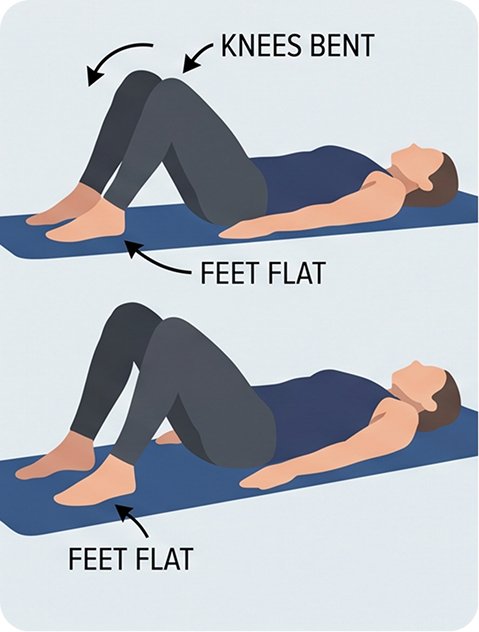
Lie on your back with your knees bent and feet flat on the floor.
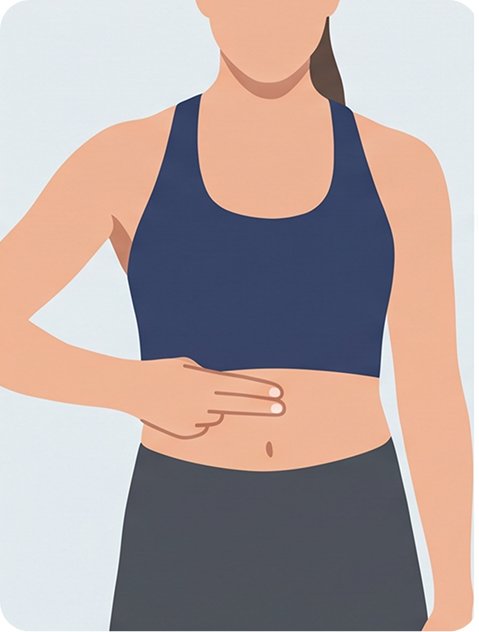
Place your fingers horizontally just above your belly button, fingertips pointing down toward your spine.
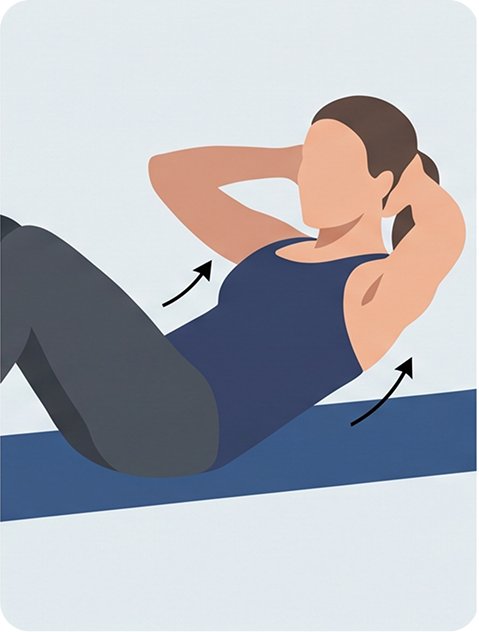
Lift your head and shoulders slightly, as if beginning a small crunch.
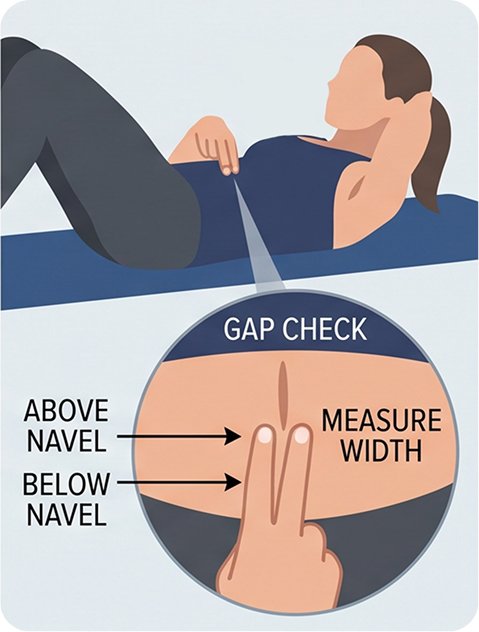
Feel for a gap between the two ridges of muscle. Note how many finger-widths fit, and whether the base of the gap feels firm or soft. Check above, at, and below the navel.
What the result means: one finger-width or less is generally normal. Two or more, or a gap that feels soft and deep, is worth assessing professionally. The width alone doesn’t determine treatment: how well the tissue tenses under load
matters as much, which is what a professional assessment measures and a
self-check can’t.
What Can Contribute to Diastasis Recti?
Pregnancy
As the abdomen expands, the connective tissue along the midline stretches to accommodate the growing baby. The likelihood of separation may increase with multiple pregnancies, a larger baby, or carrying twins or triplets.
Repeated Heavy Strain
Heavy lifting with poor pressure control may place additional strain on the abdominal wall. This is particularly relevant when lifting causes visible bulging or doming along the midline. ([North Bristol NHS Trust][2])
Significant Weight Changes
Weight gain can increase pressure within the abdomen, while repeated or substantial changes in body weight may affect the abdominal wall and its supporting tissues.
Persistent Coughing or Straining
Frequent coughing, constipation, or repeated straining increases pressure inside the abdomen. Over time, this may place additional stress on already weakened or stretched connective tissue.
Age-Related Tissue Changes
Connective tissues and muscles may gradually lose strength and elasticity with age. This can make the abdominal wall less able to manage repeated pressure or physical strain.
Diastasis recti treatment options in Singapore
If you’ve searched for treatment in Singapore, you’ve likely found three very different offers: physiotherapy, machine-based muscle stimulation, and surgery. Here’s an honest map of where each fits.
Evidence-based first line
Physiotherapy
Guided rehabilitation retrains your deep core system: transverse abdominis, pelvic floor, diaphragm, breathing, so the tissues regain tension and the gap functionally closes. The only approach that also fixes the habits (straining, breath-holding, bracing) that keep the separation loaded. Takes consistency over weeks; the results are yours to keep.
Adjunct, mild cases
Machine-based treatments (EMS/HIFEM)
Aesthetic clinics offer electromagnetic muscle stimulation across multiple paid sessions. The devices do produce contractions, and some mild cases improve, but contractions alone don’t retrain how your core coordinates under real-life load, and results without accompanying rehabilitation tend to fade.
Severe or persistent cases
Surgery
Where the separation is wide, involves a hernia, or hasn’t responded to a full course of rehab, and you’ve finished having children, surgical repair is a legitimate option via a specialist surgeon. Good pre and post-surgical core rehab improves outcomes.
Our practice policy, not marketing: your assessment decides the recommendation, even when the recommendation isn’t us. If your separation is in the surgical category, we’ll tell you directly and refer you appropriately rather than string out sessions that can’t achieve what you need.
TIMING
When Should You See a Professional?
Book an assessment if the gap is two finger-widths or more, or if abdominal bulging remains more than eight weeks after giving birth. Professional guidance may also be appropriate if the separation occurs alongside back pain, pelvic heaviness, leaking, or uncertainty about returning to exercise.
Diastasis recti can still be addressed months or years after pregnancy. An assessment can help clarify the extent of the separation and guide a suitable rehabilitation plan.
Recover Safely with Professional Physiotherapy Support
If you’re experiencing symptoms of Diastasis Recti, don’t wait to get the help you need. Our team at Orchard Health Clinic offers personalised care to support your recovery and strengthen your core. Visit our Physio Clinic in Singapore to learn how we can help you regain strength and confidence.
 Orchard Health Clinic