
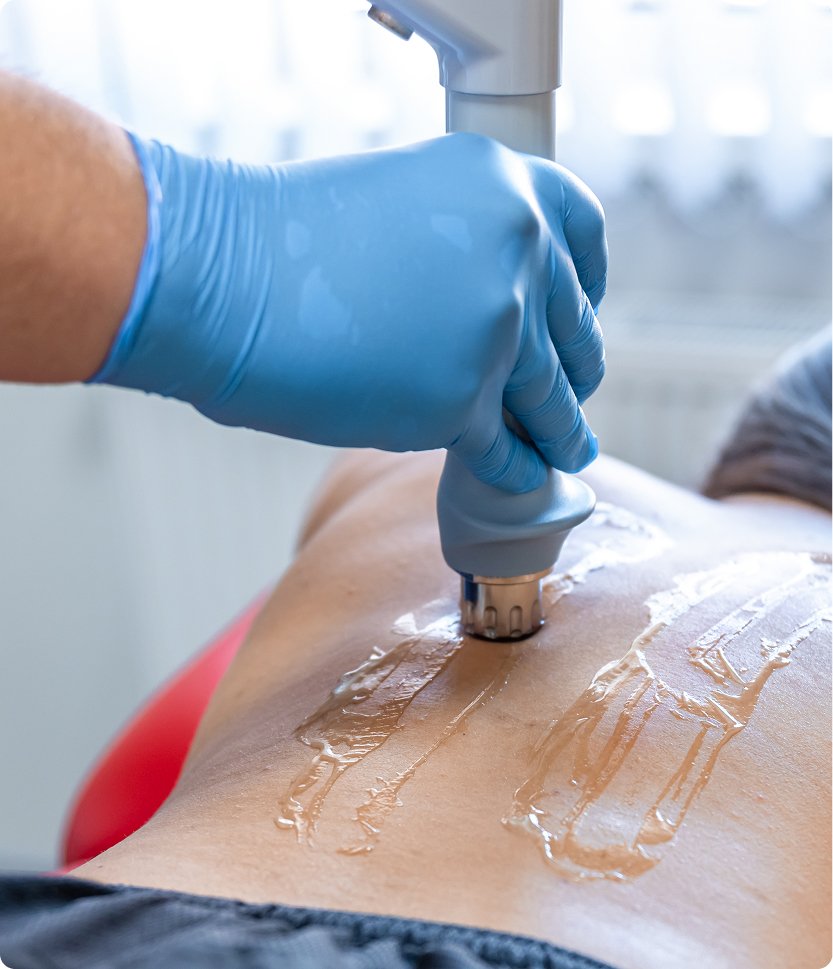
What Is Shockwave Therapy?
Shockwave therapy is a non-invasive treatment that uses acoustic waves directed at selected areas of soft tissue. It may be considered for persistent tendon, muscle, or connective tissue conditions where pain and reduced function have continued over time.
One form is radial shockwave, which delivers pressure waves across a broader treatment area. Suitability depends on the condition, symptoms, and assessment findings.
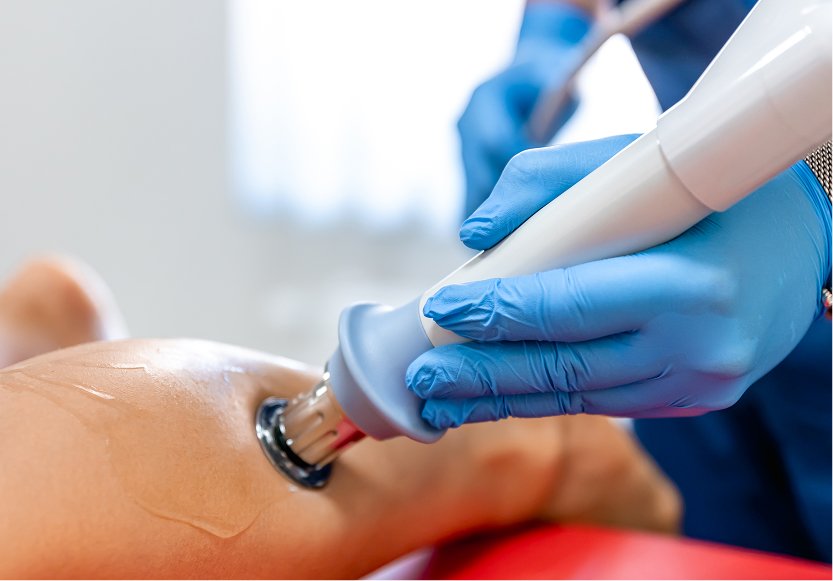
CONDITIONS WE TREAT
What Conditions Does Shockwave Therapy Treat?
Foot and Heel Conditions
Plantar fasciitis is the most established indication for shockwave therapy, with strong clinical evidence in chronic cases that haven’t responded to conservative care. Also treated: Achilles tendinopathy and heel spur–related pain.
Elbow, Shoulder and Upper Limb
Tennis elbow and golfer’s elbow, calcific tendinitis of the shoulder, where shockwave can break down the calcium deposit itself, and rotator cuff tendinopathy that has plateaued in rehabilitation.
Knee, Hip and Lower Limb
Chondromalacia patella (“runner’s knee”), greater trochanteric pain syndrome (hip), shin splints, and hamstring tendinopathy.
Muscular and Myofascial Pain
Chronic trigger points and myofascial restriction that haven’t released with manual therapy or dry needling, and long-standing muscle tightness associated with repetitive strain.
The pattern worth noticing: shockwave is a treatment for chronic problems. If your injury is acute, days or weeks old, it's usually not the right tool yet, and we'll tell you so.
RIGHT TREATMENT, RIGHT DISCIPLINE
Shockwave Therapy, Dry Needling, or Injections — Which Do You Need?
| Treatment | Main Focus | May Be Considered For | What to Know |
|---|---|---|---|
| Shockwave Therapy | Uses acoustic waves over a targeted area to stimulate a tissue response. | Persistent tendon or soft-tissue conditions, such as selected cases of plantar fasciitis or tendinopathy. | Non-invasive and usually delivered over several sessions. Suitability depends on the condition and assessment findings. |
| Dry Needling | Uses fine, sterile needles to target myofascial trigger points and muscle tension. | Muscle tightness, trigger points, restricted movement, and selected musculoskeletal pain. | May cause brief twitching or temporary soreness. It is often used alongside physiotherapy or exercise. |
| Injections | Delivers medication or another substance into a joint, tendon region, or surrounding tissue. | Selected inflammatory, joint, or soft-tissue conditions that require medical management. | Must be assessed and administered by an appropriately qualified medical professional. Benefits and risks vary by injection type. |
Shockwave Therapy as Part of a Complete Recovery Plan
Shockwave therapy may address symptoms in the affected tissue, but rehabilitation also needs to consider why the area became overloaded. Contributing factors may include training volume, muscle weakness, movement patterns, footwear, or workstation demands.
At Orchard Health Clinic, shockwave therapy may be combined with progressive loading exercises and, where appropriate, physiotherapy, chiropractic care, or osteopathy. The treatment plan is based on the assessment findings and reviewed as symptoms and function change.
YOUR FIRST VISIT
What to Expect at Your Shockwave Therapy Session
Consultation
History of the injury, how long it's been there, what you've already tried, and your activity demands. We screen for the contraindications listed below.
Assessment
Hands-on examination to locate the exact tissue involved and confirm shockwave is appropriate, plus movement and strength testing to identify what caused the overload.
Treatment
Gel is applied, and the applicator delivers pulses to the target area for roughly 10-15 minutes. Most patients describe it as an intense tapping or drumming sensation, uncomfortable but tolerable, and intensity is adjusted to your tolerance throughout. You can drive, work, and walk immediately afterwards.
Afterwards
Mild soreness, warmth, or redness for 24-48 hours is normal and is part of the healing response. Avoid high-impact activity for 48 hours; keep moving gently. Avoid anti-inflammatory medication (NSAIDs) around your sessions unless your doctor has advised otherwise; the treatment works through an inflammatory healing response, and suppressing it can reduce the benefit. Most patients notice change after two to three sessions, with continued improvement for up to three months after the course ends, as tissue remodelling continues.
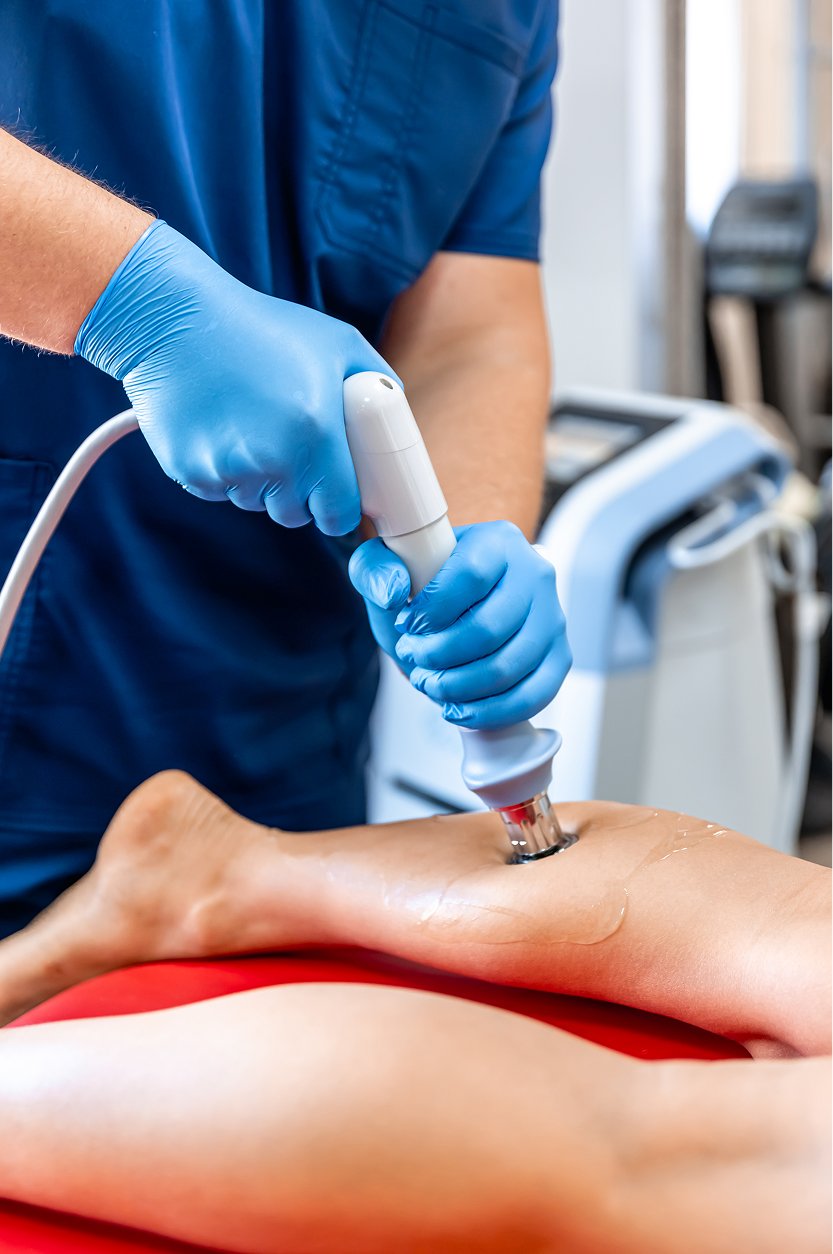
Is Shockwave Therapy Safe? Side Effects and Contraindications
Shockwave therapy is a well-tolerated, non-invasive treatment with a strong safety record when delivered by a qualified practitioner after proper assessment.
Common, temporary side effects: soreness or tenderness in the treated area for a day or two, mild redness or swelling, occasional minor bruising, temporary tingling or numbness, and slight fatigue after treatment.
Shockwave therapy is not suitable if you:
- Are pregnant (pelvic and abdominal areas absolutely; other regions only after specialist assessment)
- Have a blood clotting disorder or take anticoagulant medication
- Have an active infection, open wound, or skin condition over the treatment area
- Have a malignancy in the treatment area
- Have a pacemaker or implanted electronic device (depending on treatment site)
- Have had a corticosteroid injection in the area within the past six weeks
- Are under 18 with open growth plates in the treatment area
- Have a deep vein thrombosis
We screen for every one of these before your first session, which is why shockwave here begins with an assessment appointment rather than a booked block of treatments.
THE PEOPLE TREATING YOU
Meet Your Shockwave Therapists
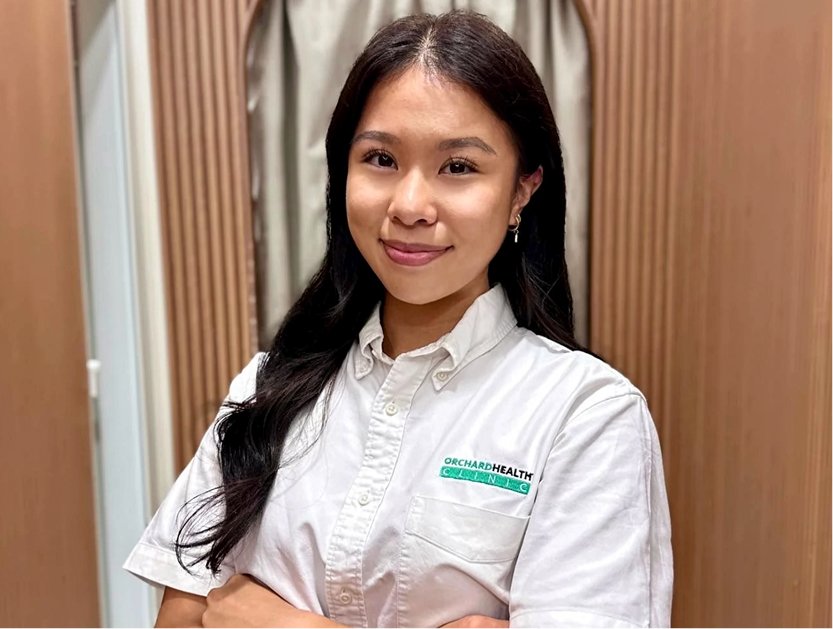
Katrine Chiu
Katrine is a Canadian-trained Chiropractor at Orchard Health Clinic. She holds a Bachelor’s and Master’s of Chiropractic from Macquarie University in Australia. With a background as a competitive athlete in figure skating, snowboarding, skiing, and rugby, she brings a strong understanding of injury recovery, mobility, and proactive care to her practice. Her areas of practice include manual therapy, spinal adjustments, and personalised rehabilitation programmes to support recovery, improve mobility, and prevent recurring pain.
Her approach focuses on addressing the underlying causes of musculoskeletal concerns, with treatment plans tailored to each individual’s needs and goals. Known for her empathetic and motivating approach, Katrine works closely with patients to help them move better, build strength, and maintain long-term
physical wellbeing.
Patient Stories
What Our Patients Say
EXCELLENTTrustindex verifies that the original source of the review is Google. Martin John went the extra mile to work with my fitness trainer. He was very detailed in the exercises that would help improve my condition that even my trainer was impressed, saying that this is the first time he’d come across such a thorough osteopath. Martin’s positive and reassuring approach gives me the confidence and motivation to work towards better health and habits.Posted on GoogleTrustindex verifies that the original source of the review is Google. I’ve had a fantastic experience here! The entire team is warm, welcoming, and truly dedicated to their clients' well-being. The treatment and care provided are top-notch, and you can really tell how much they care about helping you make real progress. Highly recommend to anyone looking for skilled professionals and exceptional care! For me if was back and shoulder related pains.Posted on GoogleTrustindex verifies that the original source of the review is Google. Excellent service by the therapists when I visited last month. I was given advice on my posture, areas to improve and also physiotheraphy to improve my range of movement on my knees and also right shoulder! I like the spaciousness of the rooms and the exercises recommended by the physiotherapist to improve my mobility and ability. They took time to understand my concerns and gave me advice on exercises I did on my own as well!Posted on GoogleTrustindex verifies that the original source of the review is Google. Mona is life changing and the front desk ladies are the best!Posted on GoogleTrustindex verifies that the original source of the review is Google. MinJee is very skillful, helpful, kind and professional in her job. Love my physio session.Posted on GoogleTrustindex verifies that the original source of the review is Google. Had my session with Min Jee. She is amiable, easy to engage and superb with her delivery. 100% recommended. Thank you very much Min Jee for your service and thank you to Orchard Health Clinic!Posted on GoogleTrustindex verifies that the original source of the review is Google. Good, professional therapists. Would recommend.Posted on GoogleTrustindex verifies that the original source of the review is Google. I had a very positive experience at Orchard Health Clinic. The staff were warm, welcoming, and professional from the moment I arrived. My therapist, Mona, took the time to listen carefully to my concerns, explained everything clearly, and made me feel comfortable throughout each session. The clinic was clean, well-organised, and appointments were managed efficiently with minimal waiting time. I genuinely appreciated the high standard of care and would happily recommend Orchard Health Clinic to anyone looking for attentive and compassionate therapy in Singapore.Posted on GoogleTrustindex verifies that the original source of the review is Google. My physiotherapist, Min Jee, was very attuned to my needs and fantastic at identifying the problem areas causing my pain. She also delivered a soft tissue release massage that really helped loosen my tight muscles and increase my mobility. Great service staff as well. Will definitely be back!
 Orchard Health Clinic